

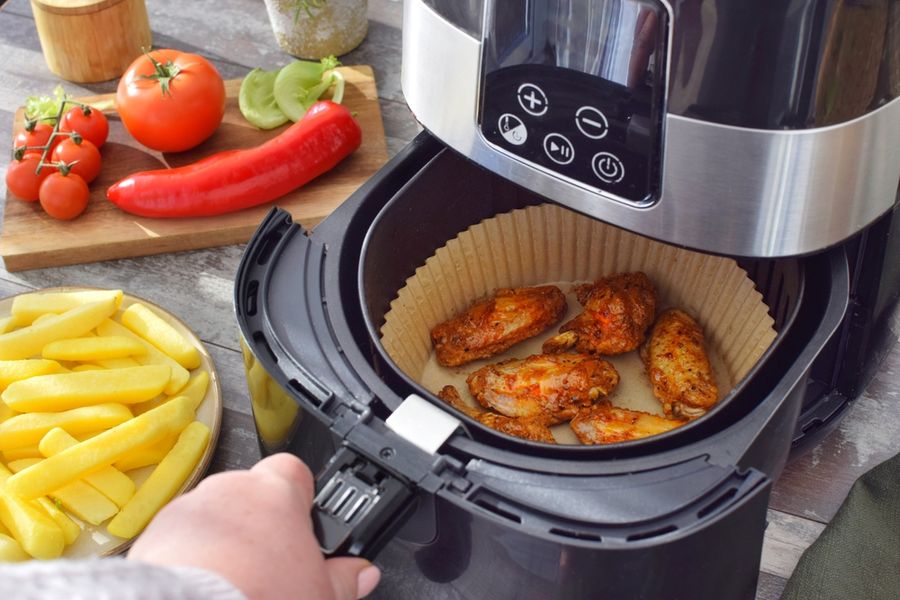
Choosing between an air fryer and a convection oven can make a big difference in how you cook day to day. Both appliances use circulated hot air to cook food faster than traditional baking, but they do it in slightly different ways. Understanding those differences — and how they affect the foods you cook most often — can help you pick the right tool for your kitchen. The goal is simple: better results with less guesswork.
How Air Fryers and Convection Ovens Work
Both air fryers and convection ovens use a fan to circulate hot air around food. This moving air creates a crisp exterior and cooks food more evenly than heat from a static source. In a convection oven, the fan circulates heat in a larger chamber, which is useful for bigger batches. Air fryers are smaller and usually cook food more quickly because the heat is concentrated in a compact space.
Air fryers often have a basket or tray that allows air to reach all sides of the food, which promotes crispness. Convection ovens, on the other hand, operate like regular ovens with the addition of a fan mode that speeds cooking and can brown foods more evenly . Both systems improve airflow, but the size and shape of the cooking cavity influence results.
Speed and Efficiency in Everyday Cooking
Air fryers tend to heat up faster because of their smaller interior. For quick meals — like reheating leftovers, crisping frozen foods, or cooking small portions of vegetables or proteins — an air fryer can save time. Because the space being heated is compact, preheating is often short or not needed at all. This makes air fryers feel fast and convenient for everyday use.
Convection ovens also cook faster than traditional ovens, but their larger space requires more time to heat up. They are efficient when you are preparing larger meals, multiple dishes at once, or foods that benefit from a more open layout. For example, when roasting a full chicken or baking multiple trays of vegetables, a convection oven’s even heat and space can be an advantage.
Texture and Cooking Results
One of the main reasons people choose air fryers is the texture they produce. Foods that you want to be crispy — like fries, nuggets, or roasted cauliflower — often come out with a crunch that mimics deep frying without using much oil . Because the hot air surrounds food in a tight space, air fryers excel at surface crispness.
Convection ovens also produce crispness, but the effect can be more subtle because the chamber is larger and the air is not as tightly contained around each piece of food. If you are baking cookies, roasting larger cuts of meat, or cooking casseroles, the even heat distribution in a convection oven can create consistent results. Both tools brown and crisp food, but air fryers often feel more intense on the surface.
Capacity and Meal Size
Capacity matters when choosing between these two appliances. Air fryers usually have smaller baskets or trays, which means you may need to cook in batches for larger meals. For one or two people, this often isn’t a problem. But for family dinners or larger gatherings, smaller baskets can make meal prep take longer.
Convection ovens have larger interiors that accommodate more food at once. This makes them useful for cooking entire meals in one cycle, such as a tray of roasted vegetables and a main dish together. If you regularly cook for multiple people or like preparing multiple items at once, the space in a convection oven can make meal planning easier.
Versatility and Everyday Use
When it comes to daily versatility, convection ovens are often more flexible because they can bake, roast, broil, and sometimes even function as a standard oven. They handle a wide range of dishes, from pies to roasts, with consistent airflow that improves cooking time and texture.
Air fryers are imaginative tools, especially when your goal is quick, crispy results. They are ideal for snacks, reheating food, and preparing smaller meals quickly. Many models also offer multiple cooking functions such as grilling, roasting, or dehydrating, which expands their usefulness beyond just “frying.” Yet, because of their size, they can feel limited when meal size matters.
Choosing Based on Your Cooking Habits
Your own cooking habits matter most when choosing between an air fryer and a convection oven. If quick meals, crispy textures, and small portions are your priority, an air fryer may fit your routine best. If you regularly prepare larger meals, bake a range of dishes, or want a multi-purpose tool, a convection oven might be more useful.
Think about the foods you cook most often and how you like them to turn out. Quick snacks and single-dish meals may feel more natural in an air fryer, while full roasts, baked dishes, and larger portions benefit from the space and airflow of a convection oven.
Match the Tool to Your Everyday Needs
Both air fryers and convection ovens use circulating hot air to improve cooking results, but they shine in different ways. Air fryers offer quick heat, crispy surfaces, and compact convenience, making them ideal for smaller meals and fast prep.
Convection ovens bring larger capacity, even cooking across multiple dishes, and broad versatility for baking and roasting. By considering your meal size, texture preferences, and everyday habits, you can choose the appliance that best supports your cooking style and makes everyday meals easier and more enjoyable.