

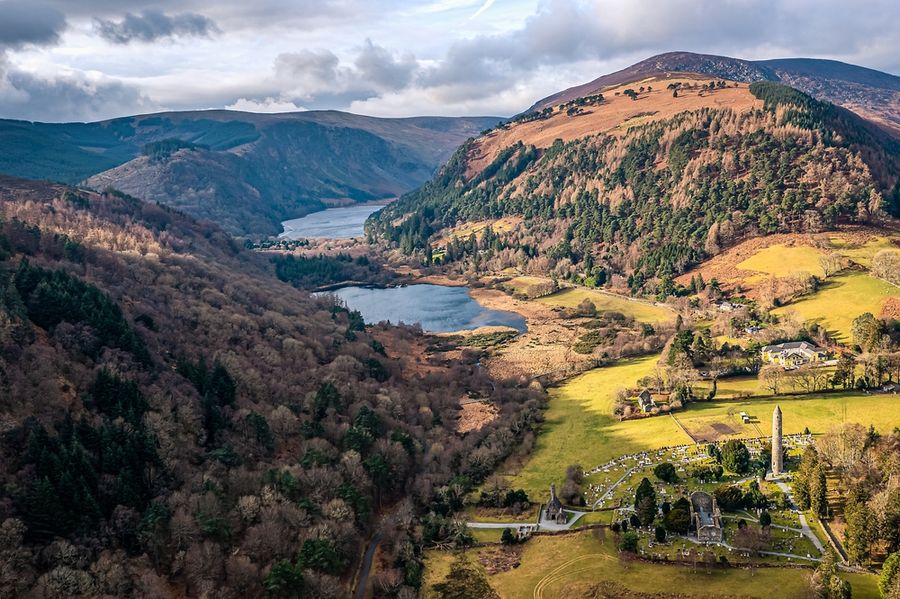
Glendalough is a peaceful valley tucked within the Wicklow Mountains of Ireland, known for its calm lakes, ancient ruins, and quiet walking paths. For travelers from the United States seeking a slower, more reflective experience, Glendalough offers a rare blend of natural beauty and spiritual history. The area invites visitors to step away from noise and schedules, replacing them with stillness, gentle movement, and moments of reflection shaped by landscape and time.
The Spiritual Roots of Glendalough
Glendalough’s spiritual story begins in the sixth century, when Saint Kevin founded a monastic settlement in the valley. He chose the location for its isolation and natural shelter, creating a place meant for prayer, learning, and contemplation. Over time, the settlement grew into an important religious center, attracting monks and pilgrims from across Ireland.
The ruins that remain today include stone churches, crosses, and a round tower that once served as both a bell tower and a place of refuge. Walking among these structures gives visitors a sense of quiet continuity. The setting encourages reflection not through grand displays, but through simplicity, age, and the steady presence of nature.
A Landscape That Encourages Stillness
The valley itself plays a major role in Glendalough’s calming effect. Two lakes sit between steep hillsides, surrounded by trees, streams, and open sky. The natural layout creates a feeling of enclosure without heaviness, making the area feel safe and grounding.
Many visitors find that simply walking near the water brings a sense of calm. Reflections on the lake change with the light, and the sounds of wind and birds replace everyday noise. The landscape does not demand attention, but gently invites it, allowing thoughts to slow and focus to return.
Walking Paths for Reflection and Ease
Glendalough offers several walking paths that range from short, flat loops to longer hillside trails. These paths allow visitors to choose their own pace and level of effort, making the area accessible to a wide range of travelers.
Short walks around the Lower Lake pass close to the monastic ruins, offering easy access and frequent places to stop and rest. Longer trails climb above the valley, opening views that encourage pause and perspective. Walking here often becomes meditative, as repetition of steps and steady breathing align with the quiet surroundings.
A Place for Solitude Without Isolation
One of Glendalough’s strengths is its balance between solitude and shared space. While the site is well known, it rarely feels overwhelming, especially during early mornings or weekdays. Visitors can find moments of privacy without feeling cut off or unsafe.
This balance makes Glendalough appealing to those new to solo travel or quiet retreats. You can walk alone, sit near the water, or explore ruins without pressure to interact, while still knowing others are nearby. This gentle presence supports reflection without loneliness.
Seasonal Changes and Their Meaning
Each season brings a different mood to Glendalough. Spring introduces fresh green growth and flowing water, symbolizing renewal. Summer offers longer days and softer light, ideal for extended walks and quiet afternoons. Autumn brings muted colors and cooler air, adding a reflective tone to the valley.
Winter is quieter and more subdued, with fewer visitors and a stronger sense of stillness. The bare landscape reveals the shape of the valley more clearly, emphasizing simplicity and endurance. Many travelers find that returning in different seasons deepens their connection to the place.
Respectful Travel and Mindful Presence
Because Glendalough holds spiritual and cultural meaning, respectful behavior enhances the experience for everyone. Staying on marked paths helps protect fragile land, and quiet voices preserve the calm atmosphere. Many visitors choose to slow their movements, limit phone use, and remain present during their visit.
Mindful travel here means allowing time rather than rushing through highlights. Sitting, walking, and observing without agenda often leads to the most meaningful moments. Glendalough rewards patience more than efficiency.
Practical Considerations for Visitors
Glendalough is located about an hour from Dublin, making it reachable for day trips or longer stays in nearby towns. Weather can change quickly, so layered clothing and sturdy shoes are helpful. Trails may be damp, especially after rain, so steady footing matters.
Facilities near the main entrance provide basic services, but the heart of Glendalough remains natural and open. Bringing water and allowing time for rest helps maintain comfort and focus throughout the visit.
A Retreat That Speaks Softly
Glendalough does not offer dramatic spectacles or constant activity. Instead, it offers quiet, space, and a sense of continuity that many travelers find deeply grounding.
Through its ancient spiritual roots, gentle landscape, and unhurried rhythm, the valley creates room for reflection and renewal. For those seeking a calm retreat shaped by nature and history, Glendalough provides an experience that lingers long after the walk ends.